


About the Programme
At the undergraduate level, the curriculum is rigorous in accordance with global standards, which is offered in wide range of mathematical subjects. It inculcates the students’ problem-solving skills, logical reasoning, critical thinking analytical skills. Moreover, they diligently impart students with a solid foundation in both theoretical principles and practical applications of mathematics. The syllabi framed for the mathematics courses for all the programmes are on par with universities of repute. A curriculum development cell conducts periodic reviews of the curriculum and facilitates necessary revisions. Frequent feedback from all the stakeholders such as students, alumni, industry professionals, and academic experts enriches the quality of the syllabus, ensuring its relevance in the real – world scenarios. Experts enhance the quality of an up-to date syllabus and helps in initiating changes as and whenever it required. The mathematical concepts are covered not only theoretically but also through laboratory sessions through Python, MATLAB, R, Octave, Origin, GeoGebra, Desmos and other computational tools. The main emphasis is to make students to understand the importance of a solid based on a wide range of mathematical subjects. With a proficient, research-oriented, and dedicated faculty, supported by an innovative curriculum and employing effective teaching methods, the department has achieved success in delivering education that aligns with the scientific, meaningful, and employable objectives outlined in National Education Policy 2020.
Academic Excellence
The programme provides a strong foundation in pure and applied mathematics through a rigorous and outcome-based curriculum.
Computational Learning
Students gain exposure to modern computational tools, programming techniques, and mathematical modelling methodologies.
Research and Innovation
The curriculum encourages analytical thinking, interdisciplinary research, and innovation-driven academic engagement.
Industry and Career Readiness
The programme equips learners with quantitative, analytical, and problem-solving skills aligned with contemporary industry and research demands.
Why Choose This Programme?
Rigorous Academic Curriculum
The programme offers a comprehensive and structured curriculum that strengthens conceptual understanding, analytical reasoning, and mathematical proficiency.
Computational and Technological Exposure
Students are trained in programming, computational tools, and data-driven techniques essential for modern scientific and industrial applications.
Research-Oriented Learning Environment
The programme promotes innovation, critical inquiry, and interdisciplinary research through projects, seminars, and academic engagements.
Industry-Relevant Skill Development
Learners acquire quantitative, statistical, and problem-solving skills aligned with emerging industry and technological requirements.
Experienced Faculty and Mentorship
The department provides continuous academic guidance through experienced faculty members committed to student growth and excellence.
Diverse Career and Higher Education Opportunities
The programme prepares students for careers in analytics, finance, technology, education, research, and higher studies in mathematical sciences and allied disciplines.
Choose Your Track
Develop analytical and quantitative skills for economic modelling, financial analysis, actuarial applications, and data-driven decision-making.
Gain expertise in statistical methods, data interpretation, programming, predictive analytics, and computational problem-solving for emerging technological domains.
Build strong theoretical foundations, logical reasoning, and research-oriented competencies for higher studies and advanced academic exploration in mathematical sciences.
What You Will Learn
Eligibility & Fee Structure
Career Paths
Your Career Roadmap
Select a specialisation track to explore the learning journey and career outcomes tailored to your chosen domain.
Microeconomics, Macroeconomics, Descriptive Statistics, Computational Statistics, Probability Distributions, Statistical Programming using R
Microeconomics, Macroeconomics, Statistical Inference, Statistical Inference using Lab, Elements of Stochastic Processes
Fundamentals of Economic Growth and Development, Mathematical Economics, Public Finance, Linear Regression Models, Linear Regression Models Lab, International
Message from the HOD
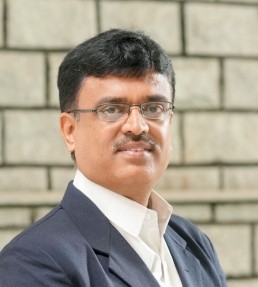
Bangalore Yeshwanthpur Campus
The Department of Statistics and Data Science is committed to fostering an engaging research atmosphere and delivering quality education. Our goal is to offer cutting-edge training in scientific methodologies that empower individuals with data-driven solutions. The curriculum is designed in accordance with global standards to ensure top-notch research and educational experiences in statistics and data science. It combines statistical expertise with the necessary tools and techniques in data science to effectively navigate and make sense of intricate, real-time data sets.
Message from the HOD
The Department of Statistics and Data Science is committed to fostering an engaging research atmosphere and delivering quality education. Our goal is to offer cutting-edge training in scientific methodologies that empower individuals with data-driven solutions. The curriculum is designed in accordance with global standards to ensure top-notch research and educational experiences in statistics and data science. It combines statistical expertise with the necessary tools and techniques in data science to effectively navigate and make sense of intricate, real-time data sets.
Admission Process
- Register with your Email ID
- Login to the Admission Portal
- Fill the Application Form
- Pay Application Fee
- Entrance Test (If Applicable)
- Assessment
- Interview
- Check login page for result
- If selected, Offer Letter attached
- Pay Course Fee Online
- Complete Admission Process
Ready to Apply?
Applications are open. Deadline: 2026-11-25 23:45:00.