


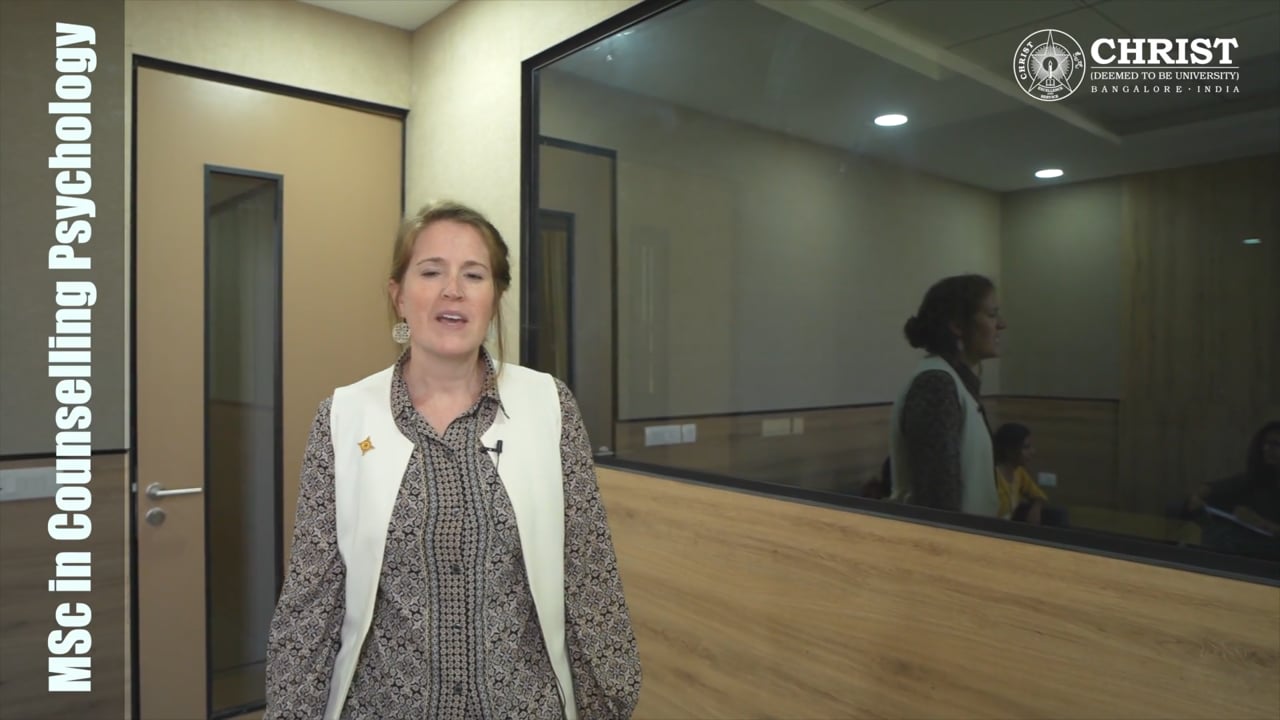
About the Programme
The programme offers a blend of theoretical and practical courses which prepares students for future professional endeavors. Counselling and professional skills are nurtured and honed by providing hands on training in counselling, exposure to field visits, certification courses, one-to-one mentoring sessions, opportunities to publish research studies, on-site observerships and internships and an exposure to cutting edge research laboratories.
FOUNDATIONS OF COUNSELLING PSYCHOLOGY
Develop a strong understanding of the theoretical foundations of counselling psychology and learn to apply psychological concepts across diverse contexts, populations, and mental health settings.
HOLISTIC AND CULTURALLY-SENSITIVE PRACTICE
Gain hands-on training in evidence-based counselling approaches rooted in a holistic understanding of mental health while working with individuals, couples, families, and groups from varied cultural backgrounds.
RESEARCH, ETHICS, AND PROFESSIONAL PRACTICE
Build competencies in designing, conducting, interpreting, and disseminating psychological research while cultivating a critical understanding of ethical, legal, and professional standards in counselling and mental health practice.
LEADERSHIP AND SOCIAL IMPACT
Develop leadership, creativity, and social sensitivity to identify community needs, advocate for well-being, and emerge as socially responsible professionals and active agents of change.
Why Choose This Programme?
Experiential and Practice-Oriented Training
The programme combines classroom learning with supervised counselling practice, role-plays, field exposure, and internships to build strong clinical and interpersonal skills.
Interdisciplinary and Contemporary Curriculum
The curriculum integrates counselling psychology with perspectives from mental health, family studies, research, and community engagement, preparing students for diverse professional settings.
Research and Critical Inquiry
Students are trained in qualitative and quantitative research methods, encouraging critical thinking and the ability to design and conduct research addressing real-world psychosocial concerns.
What You Will Learn
Programme Structure
The programme structure outlines the academic curriculum designed to provide a systematic progression of learning through core subjects, electives, and practical components across semesters, ensuring both theoretical understanding and skill development.
Semester 1 — Psychological research
Semester 2 — Multicultural counselling
Semester 3 — Summer internship
Semester 4 — Counselling internship
Eligibility & Fee Structure
Career Paths
Message from the HOD
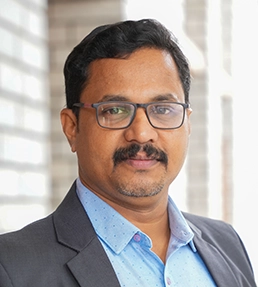
Bangalore Central Campus
Welcome to the School of Psychological Sciences!
We warmly welcome you to the School of Psychological Sciences at CHRIST (Deemed to be University), Bangalore Central Campus.
We offer a rich tradition of personal, academic, and social growth through our range of undergraduate, postgraduate, and doctoral programs in Psychology. Our programs equip students with the necessary skills for critical thinking, prob
Message from the HOD
Welcome to the School of Psychological Sciences!
We warmly welcome you to the School of Psychological Sciences at CHRIST (Deemed to be University), Bangalore Central Campus.
We offer a rich tradition of personal, academic, and social growth through our range of undergraduate, postgraduate, and doctoral programs in Psychology. Our programs equip students with the necessary skills for critical thinking, problem-solving, and research that emphasizes ethical practice and social responsibility to help prepare students to address the challenges of the 21st century. Through conferences, seminars, colloquia, internships, community engagement, research, and workshops at the department, students gain practical experience and develop essential skills.
Our dedicated faculty is committed to providing personalized guidance and innovative learning opportunities. Our department is committed to maintaining the highest quality standards in our academic programs and research. We employ a rigorous process of continuous improvement of our curriculum to ensure that our programs are relevant and prepare students for future challenges and opportunities. We invite you to explore our website to learn more about our programs, and we will be happy to assist you with any of your queries.
Admission Process
- Register with your Email ID
- Login to the Admission Portal
- Fill the Application Form
- Pay Application Fee
- Entrance Test (If Applicable)
- Assessment
- Interview
- Check login page for result
- If selected, Offer Letter attached
- Pay Course Fee Online
- Complete Admission Process
Ready to Apply?
Applications for the 2026 batch are open. Deadline: 23-Aug-2026.